

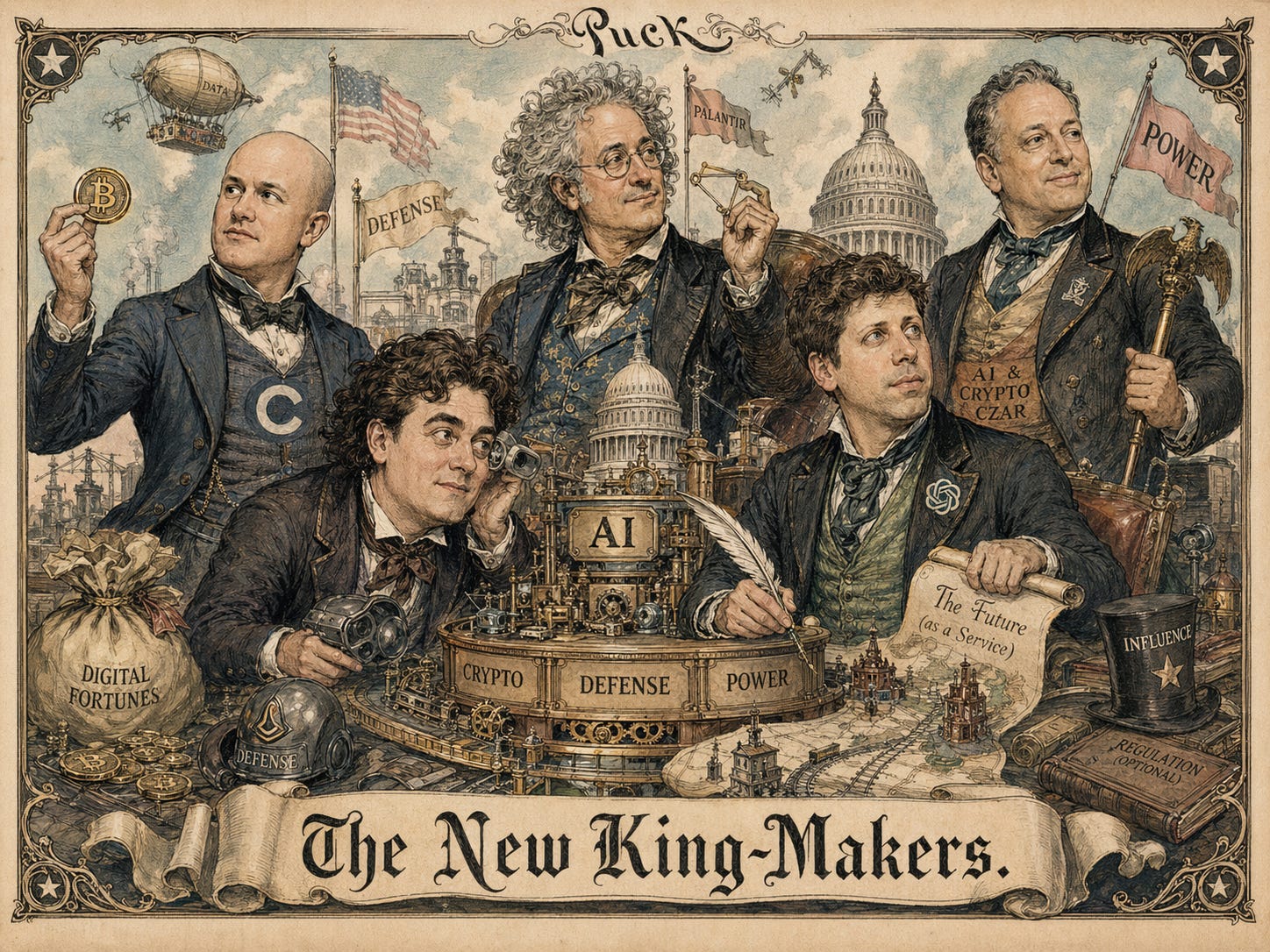
DC feels like a far-off land to most of tech, even to most of tech comms. But it has become dramatically more important during the second Trump presidency, with no sign of that abating.
Crypto and AI super PACs are getting their first real test in the Illinois and Texas primaries after sweeping 2024. The AI preemption fight is live on the Hill and in statehouses at the same time, with no Biden-era executive order left to anchor the federal position. The U.S. is nearly two months into a shooting war in Iran. And underneath all of it, the posture a tech company takes toward Washington this quarter determines what leverage it has in Washington next year.
But the legibility of Washington is hard if you are not enmeshed in it on a daily basis. The cadence, the personalities, the procedural levers, the real-versus-performative distinctions, none of it reads cleanly from the outside. And underneath all of it, the posture a tech company takes toward Washington this quarter determines what leverage it has in Washington next year. The part you can’t see from San Francisco is the part that actually moves.
So I called Nu Wexler. Nu worked on policy comms at Twitter, Meta, and Google, and was a longtime policy hand in Congress. He now has his own DC-based consultancy Four Corners Public Affairs. I've known him since our Twitter days, when even VICE hailed him as the best policy comms person in the business. When I want to understand what Washington is actually thinking right now, not what DC Twitter is performing, he's the first call I make. What follows is our conversation, edited for length and clarity.
The meta-takeaway I left with: the most expensive mistake a tech company can make about Washington is to confuse what is said for what is true. The Times reporter belittled at a press conference is what is said. The senior official taking her call on background is what is true. That gap is where policy actually happens. It’s also the gap that is hardest to see from the Valley.
Jim: When you talk to in-house tech policy leads, what are they having the hardest time getting their non-DC colleagues back at HQ to take seriously about Washington right now?
Nu: The biggest challenge for tech companies is navigating Trump and the political chaos associated with him. How closely do companies want to work with him? What are the reputational risks? For some companies, it’s all or nothing. They see 2026 as the last year to get anything done because it’s going to be very hard to pass their bills through a Democratic Congress. The smarter companies are trying to inch back to the center and rebuild bridges for when Democrats control Congress.
Jim: What does “inching back to the center” actually look like?
Nu: It’s a political calculation first. Money moving to Democratic candidates and potential committee chairs. Getting plugged back into center and center-left policy communities, not just The Heritage Foundation. More events with Democrats on the Hill. Covering both sides.
Jim: For companies whose CEOs aren’t all-in on Trump — the median tech CEO who isn’t politically aligned either way — what’s your number-one piece of counsel right now?
Nu: Make sure you have relationships on both sides of the aisle, so you’re covered after the election. Tone down the public praise of Trump. Consider talking to a broader set of media outlets. This is the high watermark for conservative media because so many people are trying to go on Fox or Newsmax to get Trump’s attention. You don’t have to do what everyone else is doing.
Jim: What’s the state of media consumption at the policymaker level? Not the unwashed masses — the people with their hands on the levers.
Nu: The Trump administration has worked hard to elevate conservative media outlets and influencers, giving them access to the White House and Pentagon briefing rooms. Simultaneously, they’ve tried to freeze out mainstream, established outlets. If the New York Times or CNN asks a question at a press conference, whether it’s Trump, Hegseth, or Patel, they’ll spend ten seconds belittling the reporter before maybe answering.
Jim: But that’s cheap heat for the base, right? Are Republican elites still influenced by the outlets they publicly scorn?
Nu: Oh, absolutely. That’s why the West Wing senior staff sat for Vanity Fair portraits. That’s why Trump still takes Maggie Haberman’s calls. The reporters he actually calls tend to be from the regular mainstream outlets that conservatives profess to hate. They know those outlets still shape media narratives. This Saturday is the White House Correspondents Dinner, and senior administration officials will be sitting at tables hosted by the Post, the Times, ABC, PBS, all the outlets they claim to despise.
Jim: Crypto is having a down moment as a market, but as a political force, it still carries a lot of water. I saw the latest Fairshake fundraising numbers this week — $180 million just for the midterms. Even if crypto isn’t the cool-kid industry in the Valley, in DC it’s still a top dog.
Nu: It’s because of the Fairshake war chest. Members of Congress may support crypto, oppose it, or be indifferent, but they’re all afraid of negative TV ads.
Jim: Which raises a question about the limits of that approach.
Nu: Right. If your industry is feared but not liked, what does that get you? It can help you block legislation. Does it help you pass legislation? I don’t know. Fairshake has done a good job getting candidates to support crypto bills or at least hold their fire. But passing legislation requires bipartisan support. Their tactics have leaned heavily on Democratic primaries, running ads that aren’t about crypto — they’re about other issues that boost or pull down candidates. That doesn’t do much for popular opinion on crypto. If you look at the early ‘26 primaries in Illinois and Texas, the crypto and AI super PACs are batting about .500.
Jim: Whereas they basically swept in 2024.
Nu: That was a Republican wave election, and they were careful about the candidates they targeted. A potential Democratic wave in ‘26 might be tougher.
Jim: On AI policy, the public polling looks contradictory. Everyone says they want guardrails. Everyone opposes preemption in their own backyard. What are you seeing?
Nu: Large majorities support AI safety and think we need a federal standard. Ask them about state preemption specifically, in their own state, and they oppose it. So they want both: state regulation and federal preemption. The media frame tends to be Bernie and AOC versus Trump, because that fits the familiar political narrative. But the pro-safety coalition is more bipartisan than people think. If you read local coverage of data center fights, it skews more conservative. A lot of data centers are in rural, Republican districts. Land use is a conservative sticking point.
Jim: And the super PACs won’t tell us much about where the public actually lands.
Nu: No, because they don’t run ads on AI. Leading the Future and the crypto PACs ran ads about immigration and inflation last cycle. Healthcare will probably dominate ‘26. That’s perfectly legal and fine, but it means you cannot look at the midterms as a referendum on AI.
Jim: What’s actual AI usage like inside DC? Does it break down along party lines?
Nu: Washington lags Silicon Valley on day-to-day usage, full stop. The way you’ve written about your own setup in Person Familiar, it’s different from how most of my friends here operate. There are people here coming up with new ways to automate things and use AI for research. It’s happening. But it’s nowhere near as prominent as it is in your world out there.
Jim: And is there a partisan split in usage?
Nu: In campaigns, Republicans have been faster to adopt AI, particularly generative AI. Democrats are still wary. Deepfakes, AI-generated ads, Republicans have had very few qualms about using them. Democrats are very careful to avoid it.
Jim: Outside the campaign world?
Nu: The rest of professional DC is looking for ways to use it. Still a smaller share of the workflow than in the Valley, but the curiosity is there.
Jim: Defense tech has taken a front seat narrative-wise the last year and a half. Alex Karp’s vociferousness, Palmer Luckey at Anduril. What are they doing that the rest of tech should be paying attention to?
Nu: They’ve capitalized on America First sentiment. They’re not just positioning their technology as effective tools —
Jim: They’re wrapping it in the flag.
Nu: Exactly. And they’ve done it in a way that other tech companies previously couldn’t. Project Maven is the obvious counterexample. But Anduril from the start said, “We’re a defense products company.” They’re not a search engine or a social media company. That attracts a workforce that isn’t going to protest executive decisions internally. Big Tech can’t just copy the posture. They spent 20 years building the opposite workforce.
Jim: What are the policy headwinds the Iran war is creating for tech?
Nu: The big surprise is that tech infrastructure in the Middle East is now a top target. When companies started talking to the Gulf states, especially Saudi Arabia, about data center infrastructure, I don’t think they imagined getting targeted by Iranian drones. That’s an additional vulnerability as they look to expand in the region.
Jim: A threat vector that Meta or Google security teams weren’t planning for.
Nu: The pitch from the sovereign wealth funds was: we’re in a time of peace and stability, we have capital to invest, you have customers in the region, don’t worry about our history. That’s not true at the moment.
Jim: Hypothetical. I’m a head of comms, and my CEO wants to crack the DC market. We don’t want to go full MAGA. Don’t want to go anti-MAGA either. What’s the playbook?
Nu: Build a campaign with bipartisan appeal, so you’re covered in either midterm outcome. Practically: build out a Washington office with Republican and Democratic staffers. Hill meetings on both sides. White House and Pentagon outreach — and remember, a lot of the Pentagon is genuinely bipartisan. Working with DoD isn’t MAGA. Balance your media outreach across outlets that cover the left and right. Spread your sponsorship dollars evenly. Same with think tanks.
Jim: How does someone outside DC build the actual muscle of reading DC — not hire a lobbyist, not subscribe to more newsletters, but develop a muscle?
Nu: Come visit. Meet staffers. Meet reporters. Get a feel for the rhythm. A lot of the quirks of this place — the congressional schedule, staffer culture, where people actually conduct business outside the House and Senate floor — only make sense once you’ve spent time here. Then hire for expertise over relationships. If you go through the lobbying roster for a lot of large tech companies right now, you can almost pick out the firms that were hired for access versus expertise. Access hires are expensive, and you have to re-staff every four years. Expertise lasts.
Jim: Parting advice for the Person Familiar reader sitting outside DC?
Nu: Tech used to be very bipartisan. Companies used to announce policy hirings in tandem: a Republican and a Democrat. Noah’s Ark. We’ve gotten away from that, especially in ‘25. The industry would be wise to return to it. You can go all in on Trump and get executive orders, but those aren’t durable. Congressional legislation is. It gives companies certainty. It lets you plan. Right now, a lot of the world could change next year.
Wise words and super helpful for anyone trying to navigate the Puzzle Palace(s) of DC. Thank you both.