

OpenAI acquired TBPN last week, the founder-hosted daily tech talk show, with assurances of editorial independence. It’s the latest expression of an instinct that hits every company eventually: when you get big enough and rich enough, you want to own the media channels that surround you.
It’s logical. It’s rational. And it is almost always the wrong play. In fact, the most successful marketing and communications exercise of this century worked in exactly the opposite direction.
Surviving to Thriving
When Liberty Media1 partnered with Netflix in 2018 on what would become Formula 1: Drive to Survive, they did something that would make most corporate communications teams physically ill: they gave production company Box to Box Films editorial control, including final cut.2
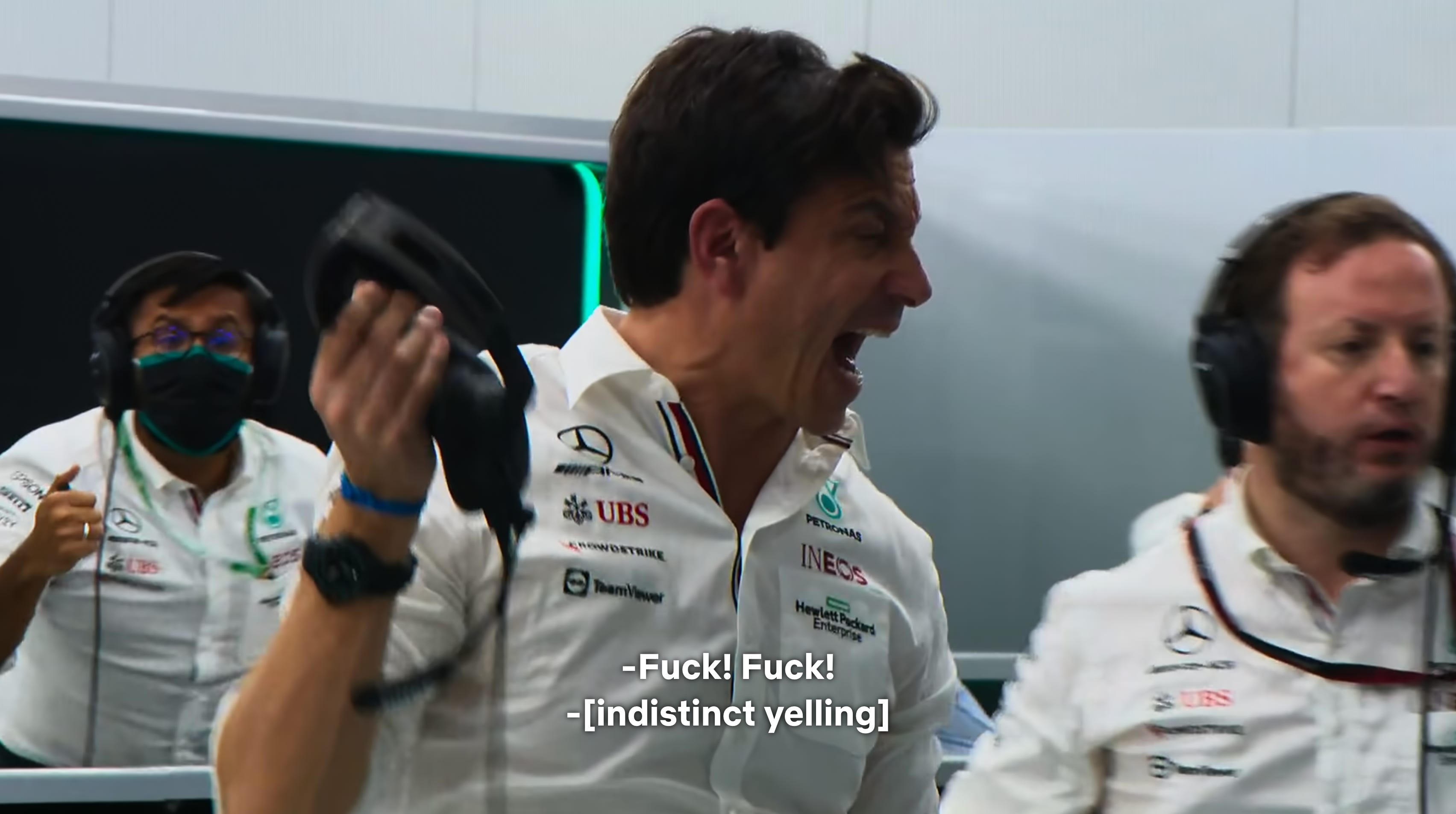
The producers could tell whatever story they found. Team principals behaving like tyrants and swearing like sailors. Driver feuds. A team plunged into bankruptcy administration mid-season by a group of creditors, which included one of their own drivers. A team forced to fire its Russian driver and strip its title sponsor’s name off the car after Russia invaded Ukraine, its owner later investigated for sanctions violations. All of it, on screen, for millions of people who’d never watched a grand prix.
This is the precise opposite of how virtually every other sports documentary property works. When LeBron produces a film about LeBron, or a tech CEO commissions a documentary about their founding journey, the subject holds final cut. And what gets systematically removed? Tension, conflict, and surprise. The exact ingredients that make anything worth watching. Drive to Survive has all of them.
The show debuted in 2019 and became a phenomenon: the No. 1 title on Netflix in 33 countries at its peak, averaging nearly 17 million views per episode by its fifth season. It’s run for eight seasons so far and spawned an entire genre of Netflix sports docuseries, all chasing the formula Drive to Survive invented.3
The response produced the most remarkable growth story in modern media. ESPN’s annual U.S. rights payment went from roughly $5 million to $75–90 million. This year, Apple took over at $150 million a year, a 30-fold increase from where the sport started less than a decade ago. F1 now has 827 million fans globally, up 63% since 2018. The audience went from overwhelmingly old, male, and European to 42% women and 43% under 35. In the U.S., 39% of adults now identify as F1 fans.4 More than half of them cited Drive to Survive as a reason they started watching. Average team valuations went from roughly $500 million in 2019 to $3.4 billion today. Even Haas, a perpetual midfielder, is worth $1.7 billion.
Not all of this is attributable to Drive to Survive. Liberty Media made smart decisions across the board: cost caps, new race formats, US market expansion. And F1 itself is a formidable media operation: F1 TV and a YouTube channel with over 14 million subscribers. They’re very good at going direct. But Drive to Survive was and still is the gateway drug.
The marketing impact doesn’t stop there. Then-Oracle CMO Ariel Kelman has said the show drew him to F1 — and Oracle subsequently became Red Bull Racing’s title sponsor. Total team sponsorship revenue crossed $2 billion in 2024 and continues to climb. LVMH signed a ten-year global partnership with F1, pegged at $1 billion. Cadillac so badly wanted its brand connected to the sport that it paid $450 million just for the right to join the grid.
The real plot twist: Mercedes and Ferrari, the two most prestigious teams and legendary auto brands, both sat out the show’s first season. Mercedes had won five straight constructors’ championships. Ferrari is Ferrari.5 Why would you let cameras in without a veto pen? Within two seasons, Mercedes and Ferrari’s own sponsors were pressuring them to participate. The teams that played it safe got punished by their own partners.
Going Direct Boring
I’ve written before about the structural forces pushing companies toward owned media: the trust gap between business and press, the shrinking atomic unit of news consumption, the ever-widening ratio of PR professionals to reporters. Those forces continue unabated.
But the going direct shift solved a distribution problem without solving the quality problem. Companies now have platforms, tools, and audience access. What most of them refuse to develop is the willingness to tell stories that are actually interesting. Media properties within companies face structural headwinds that editorial independence clauses can’t fully address.
It’s not about anyone’s intentions. You don’t need editorial interference to change the dynamic. You just need a logo on the paycheck.
Consider Coinbase. In 2022, they released COIN: A Founder’s Story, a documentary about CEO Brian Armstrong and the company’s journey to going public. They commissioned the film, hired an Emmy-winning director, and put millions behind it.6 The production quality was fantastic. The reviews were not.
The Information‘s headline nailed it: “The Coinbase Story Is Worthy of Cinema. The Film It Made for Itself Isn’t.” And it is boring, which is a shame, because when the film veers into the human dynamics of the cofounder relationship, what building something that becomes massively successful actually does to people over time, there are flashes of something compelling. But those moments get drowned out by crypto explainers and corporate retelling.
There’s a version of owned media that works. Red Bull Media House has spent two decades producing thrilling and entertaining content. The Felix Baumgartner stratosphere jump drew more than 8 million concurrent viewers, one of the most-watched live events on YouTube. But notice what Red Bull’s best content is actually about: the athletes and the feats, never the drink. Red Bull is a patron, not the protagonist. A Medici with a metal can. The less the content is about you, the more it does for you.
I’ve diagnosed this pattern before as Main Character Syndrome: the tendency for companies to cast themselves as the hero of their own story and systematically remove anything that doesn’t support the narrative. The F1 case reveals the flipside. If you do insist on being the character, you have to be a fully-rounded character, warts and all. The villains, the feuds, the backstabbing team principals, and the drivers who hate each other aren’t bugs in Drive to Survive. They’re a feature.
All Gas, No Brakes
There’s a quote by Jason Isbell, one of the greatest living American songwriters, that’s stuck with me for years. Speaking to Variety in 2023 about his unflinching HBO documentary Running With Our Eyes Closed: “Either you make a documentary that you’re completely comfortable with, or you make one that’s worth watching. There’s not really a whole lot of in-between.”
If you want to be the protagonist of your own story but you’re not willing to show the parts that make you three-dimensional, you end up with COIN or any number of athlete vanity projects. Or, in a more pedestrian form, the carefully managed LinkedIn post from the CEO that 47 people liked because they work for him.
My point here isn’t about final cut so much as it’s about what you’re optimizing for. Most companies going direct are going direct with hagiography. They paid for the microphone with nothing interesting to say into it, because everything interesting got killed in discomfort, legal review, or the CEO’s “one small note.” They’re optimizing for control, but the best marketing optimizes for audience. Those two impulses are in direct tension, and almost every company resolves it the same way.
Drive to Survive generated an estimated $290 million in streaming revenue for Netflix and turned a sport most Americans couldn’t name three drivers in into one with 52 million U.S. fans. Not despite the lack of control, but because of it. Sometimes the biggest communications risk is playing it too safe.
Liberty Media is F1's commercial rights-holder. Think of them as the league office, except the teams technically grant them the rights rather than the other way around. It's an unusual arrangement, let’s move past it.
I originally learned this from the Acquired podcast’s exceptional F1 deep dive that dropped in March. Well worth a listen.
None of them has matched it.
I am Exhibit A of this phenomenon: I became a full-on F1 sicko watching Drive to Survive during the pandemic, having never thought twice about racing. Now I’m the kind of person who sets a 4 a.m. alarm to watch a race live from Singapore.
🤌🤌
That director, Greg Kohs, also made AlphaGo, the acclaimed 2017 documentary about Google DeepMind’s Go-playing AI that holds a 100% rating on Rotten Tomatoes. The difference: AlphaGo’s protagonist is Lee Sedol, the human champion facing possible obsolescence, not the company or people that built the machine. The corporate narrative recedes, and the human story takes over.
And now my 12 year old daughter is ordering F1 Merch from Europe. My 14 year old son wears F1 gear to golf in our small town. Drive to Survive - hooked fans young and old. Smart.
exactly. smart piece